Perspective beyond the headlines
Context, experience, and guidance for people who want to understand before they act.


CCM Bridge Loan: How to Buy Your Next Home Before You Sell the Current One
.png)



CCM Bridge Loan: How to Buy Your Next Home Before You Sell the Current One
Buying a new home before your current home sells is one of the major financial decisions homeowners face in a competitive real estate market. A CCM bridge loan gives you a way to unlock the equity in your existing home, fund your next home purchase, and manage the transition period without waiting months for a sale to close. Here's how the whole process works and whether it fits your plan.
Key Takeaways
- A CCM bridge loan is a short-term mortgage from CrossCountry Mortgage that lets you use equity in your current home to buy your next home before you sell, typically lasting around 4 months with interest-only monthly payments.
- CrossCountry Mortgage allows up to about 85% of your current home's value, meaning you generally need at least 15% equity and a 680+ credit score to qualify.
- This financing option helps you avoid a sale contingency, move quickly in a tight housing market, and potentially reach a 20% down payment to skip PMI.
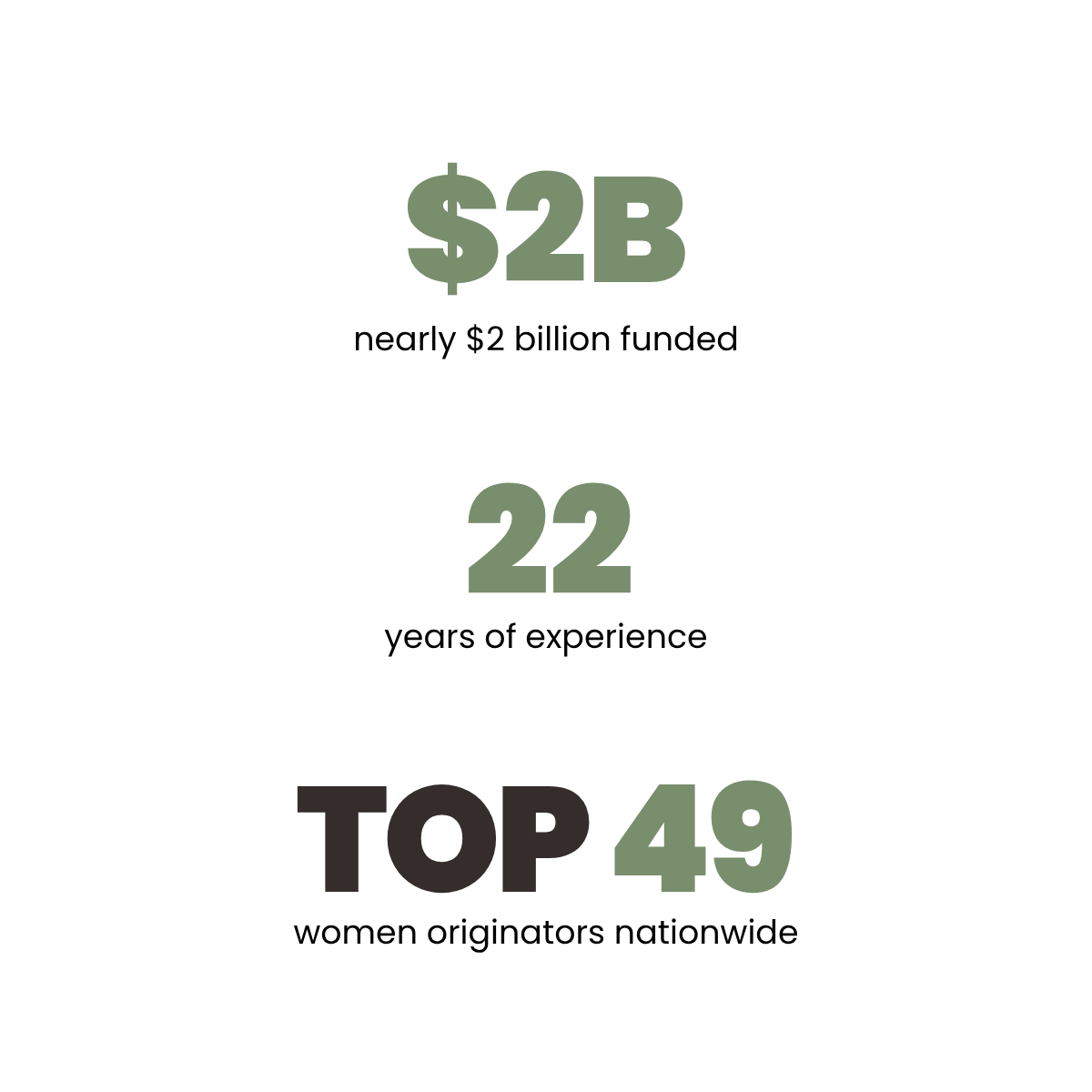
- Padi Goodspeed, a mortgage loan officer with over 20 years of expertise who has processed close to $2 billion in loans, is an example of the caliber of professionals available to guide clients through bridge financing.
Watch the Bridge Loan Program Video to Learn More
What Is a CCM Bridge Loan?
A CCM bridge loan is CrossCountry Mortgage's short-term gap financing that lets you complete a home purchase before selling your current one, using your existing home's equity as collateral. Also called a swing loan or gap loan, bridge loans provide short-term financing for homebuyers who need to act fast. Bridge loans offer a faster application and funding process than traditional loans, which matters when sellers won't wait.
CCM typically structures these in two ways: the bridge loan either pays off your existing mortgage and frees up equity for a down payment on your new house, or it sits as a second mortgage behind your current one to fund the down payment on the new property. Homebuyers can access up to 80% of their home's value with most lenders, though CCM's program extends up to about 85%.
Bridge loans typically have a repayment period of 3-12 months across the broader market. CCM's term runs about 4 months, making it a focused, temporary solution until your current home sells and you settle into your long-term mortgage. Interest rates are higher than on a standard 30-year fixed mortgage, but payments on bridge loans may be interest-only during the loan term, keeping cash flow manageable.
How a CCM Bridge Loan Works in a Real Home Purchase

Let's walk through a realistic scenario. Suppose you own a home valued at $500,000 with a $325,000 remaining balance on your existing mortgage. That gives you $175,000 in equity, or 35%. You want to buy a new home priced at $600,000.
CCM allows up to 85% LTV on your current home, which equals $425,000. Subtract your $325,000 mortgage balance, and you have roughly $100,000 available through bridge financing. Bridge loans can cover expenses like down payments and closing costs on your new property, so that $100,000 goes directly toward your purchase. If you want a 20% down payment ($120,000) to avoid PMI, you'd cover the remaining $20,000 from savings or other funds.
During the bridge term, you make interest-only mortgage payments on the bridge loan while potentially still carrying your old mortgage. Bridge loans can lead to holding two mortgages simultaneously during this overlap, so your budget and income need to support both. The bridge loan is repaid in full, usually as a balloon payment, from the sale proceeds when your current home sells. A realistic timeline might look like: get pre-approved in early spring 2026, close on your new home in May, list your current one immediately, and sell within CCM's roughly 4-month window. Throughout the entire process, your real estate agent and CCM loan officer coordinate to keep dates aligned.
When to Use a CCM Bridge Loan (and When Not To)
A bridge loan works best when the timing between selling your current one and buying your next home doesn't line up. According to recent industry data, 60% of sellers were concurrent buyers in 2025, a trend that suggests the buy-before-you-sell challenge isn't going away. Companies like Flyhomes, founded in 2016 to address buy-before-you-sell issues, and HomeLight, which allows clients to move without selling their current home, reflect how widespread this need has become. Guaranteed Backup Contracts from various providers help qualify for new mortgages before selling, but a CCM bridge loan gives you direct control over funds.
Good scenarios include needing to make a non-contingent offer in a competitive real estate market, facing mismatched closing dates, or wanting to stage your property for a top-dollar sale while already settled in your new house. Bridge financing is attractive when the money from your first home's equity can get you to 20% down and save you from paying PMI on your next home.
It's not ideal if you have thin equity, unstable income, or a tight debt-to-income ratio. If your home could sit on the market longer than four months, the cost and stress of two mortgage payments accumulate. Higher borrowing costs are common with bridge loans due to their short-term nature, so this works best as a defined transition rather than long-term financing. Discuss your local market conditions with your real estate agent and a CCM loan officer before committing.
Pros and Cons of a CCM Bridge Loan
Like all bridge loans, a CCM bridge loan offers flexibility at a cost. Weigh the benefits and trade-offs before making your decision.
Pros: You can make a non-contingent offer and move fast in a competitive housing market, which many sellers find attractive. You get immediate access to a lump sum for a stronger down payment. Interest-only payment structures during the roughly four-month term keep monthly payments lower than amortizing options. CCM often doesn't require an appraisal on the current property, speeding up approval and reducing upfront cost. A large bridge-funded down payment can help you reach 20% on your new home and avoid private mortgage insurance, potentially offsetting some of the bridge loan's higher rate. Bridge loans provide access to 80% of home equity with most lenders, and up to 85% with CCM.
Cons: Bridge loans often come with higher interest rates than traditional loans, sometimes in the 6-12% range. The short repayment window of about four months with CCM means you need confidence your property will sell. Closing costs and fees typically run 1-3% of the loan amount. If the current home doesn't sell as anticipated, borrowers may face double payments. Failure to sell the old home within the loan term may lead to financial stress. Model a quick 30-day sale versus a slower 120-day sale to understand total interest and cash flow impacts before you commit.
CCM Bridge Loan Requirements and Eligibility
To qualify for a CCM bridge loan, you need a minimum credit score of 680, sufficient documentable income, and a debt-to-income ratio that can absorb the bridge plus your new long-term mortgage. Homeowners need at least 20% equity to qualify for bridge loans with most lenders, but CCM's threshold is lower at roughly 15%, allowing up to about 85% LTV on your current home.
The property used as collateral is typically a primary residence. Bridge loans provide up to 80% of your home's value at many companies, so CCM's 85% is a meaningful advantage. Documentation you should expect to provide includes recent pay stubs, W-2s or tax returns, bank statements, a current mortgage statement, and insurance declaration pages.
Keep in mind that the total bridge loan amount includes closing costs, prepaid interest, and lender fees, so the usable cash for your down payment will be somewhat less than the full approved amount. Some borrowers may be required to take both the bridge loan and the new permanent mortgage through CCM, which simplifies underwriting and coordination between the two mortgages.
Step-by-Step: How to Get a CCM Bridge Loan
Start with an initial conversation with a CrossCountry Mortgage loan officer to confirm whether bridge financing fits your budget, lifestyle, and local real estate conditions in 2026.
During prequalification, your loan officer will pull credit, estimate your home's value (often via automated valuation rather than a full appraisal), review your current mortgage payments, and calculate how large a bridge loan you might qualify for. You'll then choose a loan structure: paying off the old mortgage entirely or taking a second mortgage bridge loan for the down payment only, based on your cash flow and comfort with holding two mortgages.
Next comes the application: submit your financial documents, sign initial disclosures, and work through any conditions like proof of listing or a signed purchase contract on your new property. At closing, you'll close on the bridge loan and new mortgage, sometimes on the same day, using bridge funds toward your new home's down payment and closing costs. Then you list and sell your current home within the bridge term.
Stay in close contact with both your real estate agent and CCM loan team during this transition period to manage dates, extensions, and any market shifts that affect your sale timeline.
FAQ: CCM Bridge Loans
These questions address practical details and edge cases not fully covered above.
What happens if my current home doesn't sell before the bridge loan is due?
CCM may sometimes offer a short extension depending on the circumstances, but extensions are not guaranteed. Additional interest will accrue until payoff. If the market shifts and your property takes longer to sell, you'll need a backup plan, whether that means tapping savings, adjusting your asking price, or exploring other financing to cover the gap.
Can I refinance my bridge loan if I need more time?
Most CCM bridge loans are designed to be paid off from sale proceeds rather than refinanced. Rolling a bridge into a longer-term loan would typically require a new application and full underwriting, essentially starting a fresh process with new mortgage rates and terms.
Is a CCM bridge loan better than a HELOC for buying my next home?
A home equity loan or HELOC usually offers lower rates and flexible draws but can take longer to set up and may not deliver as large an immediate lump sum. A bridge loan is built specifically to cover a one-time down payment and closing costs quickly. If speed and a guaranteed lump sum matter more than lower rates, bridge financing is typically the better fit.
Can I use a CCM bridge loan for a second home or investment property?
Eligibility varies by property type and investor guidelines. CCM commonly focuses bridge loans on primary residences and sometimes second homes. Check with a loan officer about your specific occupancy plans and any details that may affect your eligibility in your country or state.
Will rising or falling interest rates affect my CCM bridge loan?
The bridge loan itself usually carries a fixed interest rate during its short term. However, overall mortgage rates in 2026 can influence the permanent mortgage rate on your new home, so timing the long-term financing still matters. Even first time homebuyers should pay attention to rate trends when planning the home financing strategy around a bridge loan.

.png)
.png)

Clarity for Every Market Cycle
Thoughtful insight for decision makers.

Mortgage insight shaped by over $2 billion in funded loans.