Perspective beyond the headlines
Context, experience, and guidance for people who want to understand before they act.


U.S. Housing Affordability Hits a Crisis Point
.png)



U.S. Housing Affordability Is Now Worse Than the 2008 Financial Crisis
Home prices have far outpaced income growth over the past two decades, pushing homeownership out of reach for a growing share of American households. Here's how the numbers have shifted.
2005:
Median household income: $46,326 (Census Bureau)
Median existing home price: $232,500 (FRED/Census)
Home price-to-income ratio: 5.0x
2026:
Median household income: $83,730 (Census Bureau, most recent available)
Median existing home price: $396,800 (NAR, January 2026)
Home price-to-income ratio: 4.7x
At first glance, the ratio looks slightly better today than in 2005. But that comparison is misleading, because in 2005 the average 30-year mortgage rate was roughly 5.9%, comparable to today's 6.09%. The critical difference is what happened in between: rates spent years at historic lows between 3% and 4%, reshaping what buyers expected to pay. Anyone who locked in during those years is sitting on a rate they can't afford to give up, which has frozen existing-home inventory and created the supply crisis that defines today's market. (Our bridge loan helps sellers access equity to buy now, before they sell)
The real affordability picture is worse than the headline ratio suggests and here's why.
Even though incomes have risen roughly 81% since 2005, the median home price has climbed 71% over that same period. On the surface, incomes kept pace. But the monthly cost of buying a home hasn't followed that math. In 2005, a buyer putting 10% down on a $232,500 home at 5.9% faced a monthly mortgage payment (principal and interest) of roughly $1,240. Today, a buyer putting 10% down on a $396,800 home at 6.09% faces a payment of roughly $2,160. A 74% increase in monthly cost. If you’re in the Bay Area, or California in general, these numbers are much higher.
When you add in the sharp increases in property taxes, homeowner's insurance, and property insurance premiums over the past two decades, the true carrying cost of homeownership has risen far more than the sticker price alone would suggest.
Nearly 75% of U.S. Households Can't Afford a Median-Priced New Home
According to NAHB's 2025 Priced-Out Analysis, 74.9% of all U.S. households, roughly 100.6 million, cannot afford a median-priced new home, which NAHB estimates at $459,826. This is based on standard underwriting criteria requiring that mortgage payments, property taxes, insurance, and PMI not exceed 28% of household income, assuming a 10% down payment and a 6.5% mortgage rate. At that price and rate, a household needs a minimum income of roughly $141,400 to qualify.
The situation is even more striking at lower price points. NAHB's affordability pyramid shows that 52.87 million U.S. households can only afford homes priced at $200,000 or below, and nearly 57% of all households (76.4 million) cannot afford a $300,000 home. Every $1,000 increase in the median new home price prices an additional 115,593 households out of the market, and every 25-basis-point increase in mortgage rates prices out approximately 1.1 million more.
A large share of would-be buyers are simply priced out before they even start looking.
Mortgage Rates Remain a Pressure Point
Even after the Federal Reserve cut its benchmark rate three times in the second half of 2025, 30-year fixed mortgage rates remain well above the levels that defined the 2020–2021 buying frenzy. The Freddie Mac average sits at 6.09% as of last week, and Zillow reports an average of 5.87%. While those rates have come down from nearly 7% a year ago, they are still roughly double the 3%–4% range that prevailed before 2022.
This matters enormously for monthly payments. At 3.5%, a $400,000 mortgage costs $1,796 per month in principal and interest. At 6%, that same loan costs $2,398.That’s $602 more every month, or $7,224 more per year. That gap alone is enough to disqualify millions of households under standard underwriting guidelines.
The Lock-In Effect
Housing supply remains historically tight, and many believe the mortgage rate "lock-in effect" is a major reason why. According to NAHB data cited by Realtor.com's chief economist, 83% of outstanding mortgages currently carry a rate below 6%, and 55% are below 4%. Homeowners who locked in those rates during the pandemic have little financial incentive to sell and take on a new mortgage at today's rates.
The result is a severe inventory shortage. The U.S. is estimated to be short roughly 1.5 million homes, according to NAHB, while other estimates from Freddie Mac and others have placed the shortfall as high as 3.8 million units. Existing-home inventory sat at just 1.22 million units in January. That’s a 3.7-month supply, well below the roughly 6-month level considered balanced. NAR's Chief Economist Lawrence Yun has called the current environment "a new housing crisis," noting that "the movement is not happening, Americans are stuck."
On this week’s webinar, we will discuss this in more detail.
Sales Activity Has Slowed Sharply
Existing-home sales fell 8.4% month over month in January 2026, the steepest monthly decline since February 2022, pushing sales to their slowest pace since late 2023. Sales were down 4.4% from a year ago, with declines across all four major regions. Properties are taking a median 46 days to sell, up from 41 days a year ago.
Despite the slowdown in transactions, the median existing-home price still reached a record high for the month of January at $396,800. You are witnessing 31 consecutive months of year-over-year price increases. Low supply continues to put a floor under prices even as demand weakens.
What's the Bottom Line?
NAR's Housing Affordability Index has improved for seven straight months and now sits at 116.5, its highest reading since March 2022, thanks to wage gains outpacing home price growth and mortgage rates easing from their 2024 peaks. That's a genuinely positive signal. But the structural picture remains challenging: prices are near record highs, rates are still elevated relative to the decade prior, supply is constrained by the lock-in effect and years of underbuilding, and 75% of households can't qualify for a new home at today's prices.
Affordability is improving at the margins, but for most American households, the math still doesn't work. Until either rates drop substantially, supply catches up, or prices correct meaningfully, the housing market will remain one of the economy's most persistent pressure points.
Sources: U.S. Census Bureau, Federal Reserve (FRED), National Association of Realtors, NAHB 2025 Priced-Out Analysis, Freddie Mac, Zillow, Realtor.com, CNBC.

.png)
.png)

Clarity for Every Market Cycle
Thoughtful insight for decision makers.

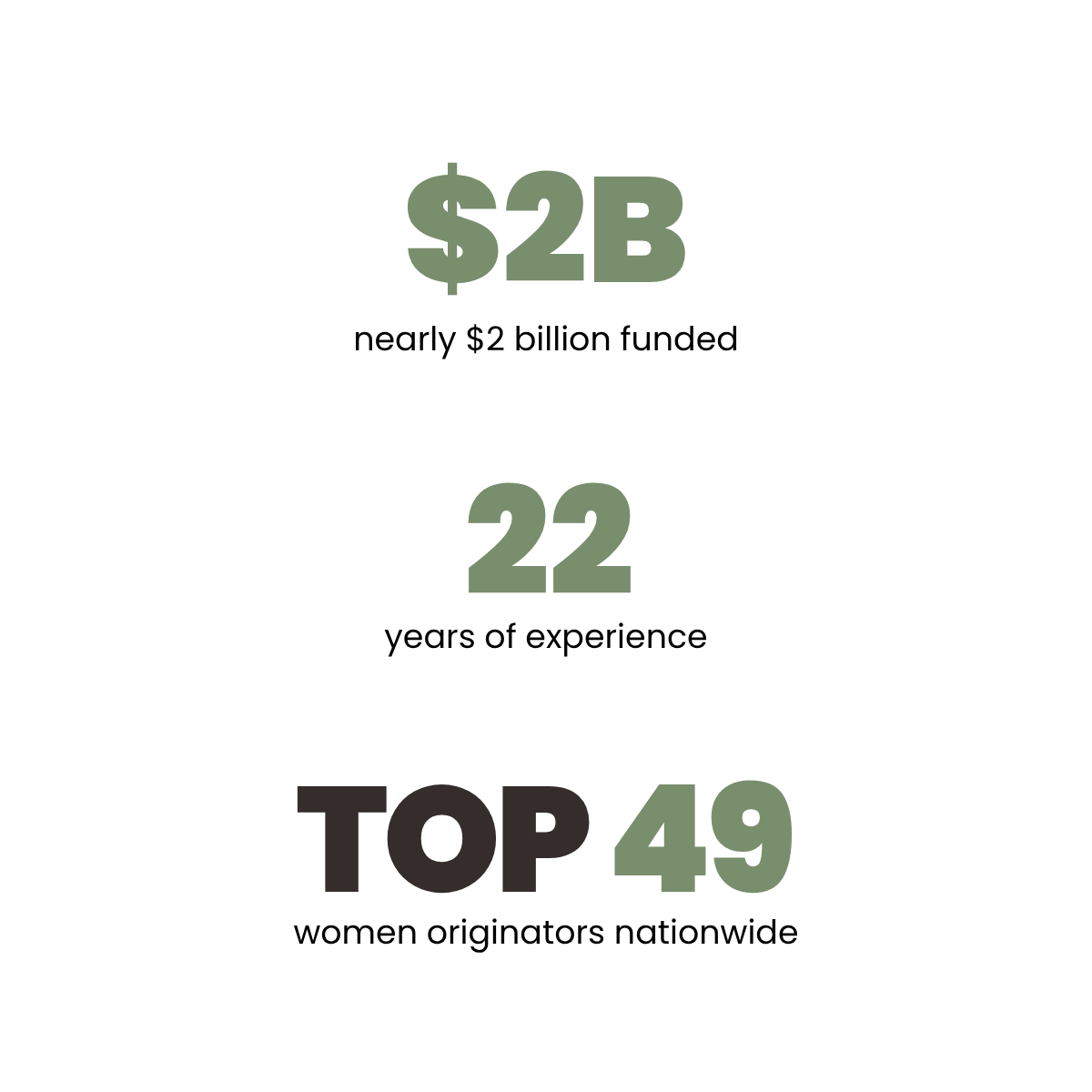
Mortgage insight shaped by over $2 billion in funded loans.